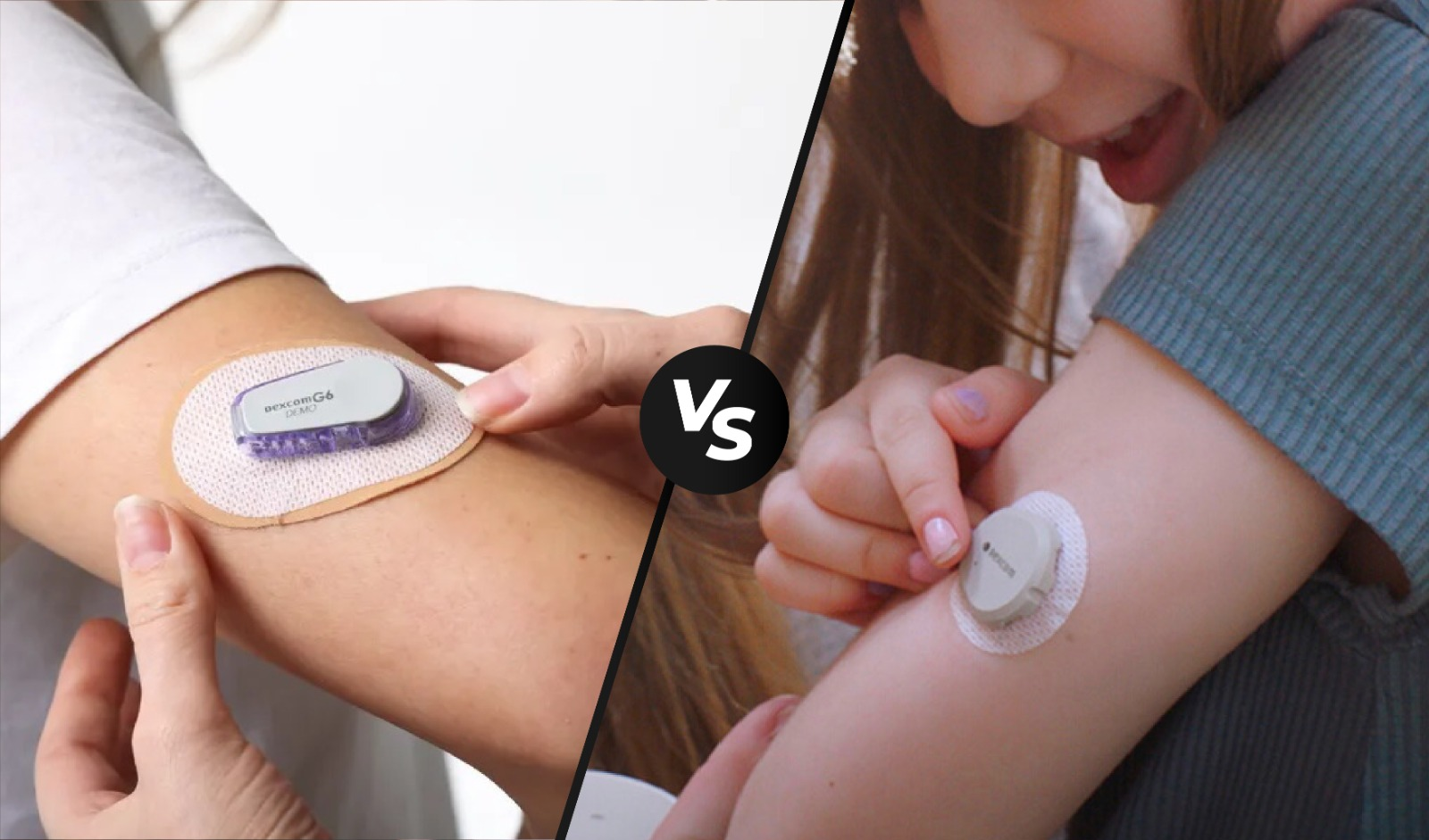
The selection of the appropriate CGM is a critical choice. Due to the availability of the Dexcom G7, a lot of users are doubting whether it is time to switch off the trusted Dexcom G6. This guide discusses the differences between the two potent systems to nourish your health and life.
Dexcom G6 vs G7 Overview, What Changed In The Latest CGM
Replacement of the old generation with the new one is a huge advancement in medical technology. Although it was well-designed, the new product is aimed at a more compact, one product, experience making the device, as well as the digital app, easier to manage in day-to-day life.
Key feature upgrades in Dexcom G7
The most evident enhancement is the sensor and transmitter design that is fully integrated. Moreover, the time used in warming up is minimized tremendously and users can view data almost instantly once it is applied.
‣ Who should consider upgrading from G6 to G7
Individuals who prioritize discretion and speed will find the upgrade highly beneficial. If you find the older system cumbersome, the smaller profile offers a much more comfortable daily wear experience.
‣ Fast Facts For First-Time CGM Buyers
New users should know that these devices provide real-time readings every five minutes. This continuous stream of data helps prevent dangerous highs and lows without fingersticks.
Quick comparison table, Dexcom G6 vs Dexcom G7
The overall comparison of the two devices as compared to each other shows that the maker has been keen on the patient experience by ensuring that the devices have been miniaturized and are efficient. Two systems have high accuracy rates but their physical architecture is quite different. Understanding these structural variations is the first step in deciding which model from DirectMed Delivery will integrate most seamlessly into your routine.
‣ Sensor size, wear time, and warmup compared
The Dexcom G7 sensor size is roughly sixty percent smaller than its predecessor. While both offer a ten-day period, the newer version includes a twelve-hour Dexcom G7 wear time grace period.
‣ Accuracy metrics and real-time data performance
Both systems provide exceptional data performance, but the newer model boasts a better score. This ensures real-time data is close to laboratory results, offering greater peace of mind for insulin dosing.
‣ Calibration requirements explained
The first advantage is that no daily fingerstick calibration is needed in both systems. You can however manually calibrate in case you are feeling that your sensor readings are not correlating with your symptoms.
Which is more accurate, Dexcom G6 or G7
The most important aspect in choosing a medical device is its accuracy. In a comparative analysis of Dexcom G6 vs G7, clinical trials indicate that the two are very reliable. Nevertheless, the advanced algorithms of the G7 provide a high level of accuracy especially in lower levels of glucose where hypoglycemia identification is crucial to safety.
Understanding MARD and clinical accuracy data
The Dexcom G7 accuracy MARD is one of the lowest in the industry at 8.2 percent. This lower percentage indicates a higher level of accuracy, reflecting how accurate is Dexcom G7 during clinical use.
‣ Real-world accuracy based on user feedback
Many long-term users of the Dexcom G6 report that the newer version responds faster to rapid changes. This responsiveness is helpful after meals or during exercise when blood sugar levels shift quickly.
‣ How sensor placement affects glucose readings
Consistency in readings often depends on where the device is applied on the body. While the abdomen is common, the back of the upper arm is now the preferred site.
Sensor design and comfort differences
The physical feeling of wearing a medical device 24/7 is a major consideration for patient compliance. DirectMed Delivery understands that a bulky sensor can be a deterrent, especially for those with sensitive skin. The evolution of the hardware focuses on making the technology feel almost invisible.
‣ Size and profile comparison for daily wear
The Dexcom G6 will need an additional transmitter, which makes the skin profile taller. Conversely, the newer one is a single and low profile model that fits flatter eliminating the possibility of catching onto clothes.
‣ Adhesive quality and skin sensitivity tips
The sticker on the latest model has been reworked in such a way that it is more breathable yet still very strong. In case you have a sensitive skin barrier films are used to make sure that the device is firmly stuck and it does not cause discomfort.
Dexcom G6 vs G7 app features and connectivity
It is the integration of software in the modern management of diabetes. The two generations are also using advanced mobile applications but the Dexcom G7 application has been redesigned fully to be faster and more intuitive. It brings together functionalities such as Dexcom Clarity into the main screen, such that you view your 24-hour trends and Time-in-Range reports without having to jump between several applications.
iPhone, Android, and smartwatch compatibility
Broad compatibility is a hallmark of the brand, with extensive Dexcom G7 iPhone compatibility and Dexcom G7 Android compatibility. Checking levels via Dexcom smartwatch compatibility allows for monitoring your health during any daily activity.
Dexcom Follow and Share features compared
The Dexcom Follow app features remain a vital tool for caregivers, allowing remote monitoring. Whether using the older or newer system, sharing data with ten followers ensures a safety net is always in place.
Does Dexcom G7 require a separate transmitter
A significant change is that the Dexcom G7 transmitter vs G6 is integrated directly into the sensor. This means you no longer have to keep track of a separate, reusable transmitter component.
Alerts and notifications, which system is smarter
The main objective of any CGM is safety and the alert system is the mouthpiece of the device. The newer one is more customizable, as a user can silence all the alerts of a certain time or establish more subtle notification sounds. This will ensure that the device becomes easier to use in a working or noisy atmosphere without choosing to forgo the required safety notices.
‣ Low, high, and urgent low soon alerts explained
Both systems have predictive alerts that will give you warning against serious events. The Urgent Low Soon alert especially comes in handy as it gives a twenty minutes warning before the level becomes dangerous and would then have time to avoid hypoglycemic attacks.
‣ Custom alert settings for better glucose control
The user can customize his experience by setting the parameters of high and low notifications. As an example, you can establish your thresholds of day and night to have a better sleep and alertness management of your daily care.
Cost comparison in the United States
The most stressful part of diabetes management is frequently the financial part of the process, which involves medical supplies. Discussing the cost of the Dexcom G6 vs G7, the monthly expense in the overall amount with sensors and transmitters needs to be considered. DirectMed Delivery is involved in trying to explain these costs to help our patients not to get shocked when they receive the bill.
‣ Monthly cost of Dexcom G6 vs G7 sensors
Generally, the cost of newer sensors is comparable to the combined cost of older components. Since the transmitter is built-in, you purchase one item, which simplifies the medical supply ordering process for the end user.
‣ Insurance coverage, Medicare, and copay expectations
Most major insurance plans, including Medicare, have expanded their coverage to include both generations. However, specific copays vary by plan. It is always wise to verify coverage to see if you can I switch from Dexcom G6 to G7.
Where to buy Dexcom sensors in the USA
Your supplies can be learned from specialized medical distributors or retail pharmacies. Selecting a partner that is trustworthy such as DirectMed Delivery will make sure your supplies are received on time and will provide you with the support that you need.
Pros and cons, Dexcom G6 vs Dexcom G7
Each medical device is relative to its advantages and disadvantages, and what would be the best device to use by one individual may not be the best intended to be used by another. Some of the advantages and disadvantages of the Dexcom G7 include considering the level of ease of use and the ability to function with the older insulin pumps. The objective assessment of these factors can contribute to the objective decision that would be in line with your particular health objectives.
Biggest advantages of the G7 upgrade
The most significant benefits include the vastly improved Dexcom G6 vs G7 warm up time and the smaller footprint. Additionally, the simplified app interface and twelve-hour grace period make daily diabetes management feel less interrupted.
Situations where G6 may still be the better choice
Despite the advancements, the Dexcom G6 is still worth it for those who use automated insulin delivery systems not yet integrated with the G7. If your pump requires the older sensor for “closed-loop” mode, staying is essential.
Common complaints reported by users
Users have reported that the range of the Bluetooth of the newer integrated units may not be as long as the standalone transmitters. Some others at times speak of the adhesive patch size being smaller and needing more attention in their usage.
Dexcom G6 vs G7 for type 1 and type 2 diabetes
In both type 1 and type 2 diabetes, Dexcom G6 and G7 can be used to provide valuable information to enhance A1c and time in range. Adults tend to choose the G7 due to its simplicity and the design of a one-unit portable computer.
The smaller less obtrusive sensor of the G7 will work to the advantage of the children and teens, and the easier application will go to the seniors. Clinicians tend to prescribe the most recent technology with accuracy and ease of use being the main factors of ensuring consistency in wearing.
Should you upgrade now or wait
The upgrade to the Dexcom G7 or not will depend on your requirements and existing system. Unless your existing device is malfunctioning, and it is compatible with your pump, then you might not even feel like changing. Always consult your doctor about compatibility and insurance requirements.
The End Note!
To conclude, the Dexcom G6 and G7 systems both provide life-changing technology to diabetics. Although it is a solid and stable workhorse in integrating a pump, the G7 is the future of wearable medical devices due to its small size and quick warmup. It is possible to guarantee that you will always have access to the latest tools and the professional advice required to take full control and independence over your health by collaborating with an established provider, such as DirectMed Delivery.
Frequently Asked Questions
Can I switch easily?
Yes, switch easily with a new doctor’s prescription. Always check insulin pump compatibility before starting at DirectMed Delivery for sensors.
Does G7 need calibration?
While factory-calibrated, manual entry is allowed. Only if readings don’t match your physical symptoms.
Is the G7 sensor small?
The Dexcom G7 sensor size is 60% smaller than G6, making it extremely discreet and comfortable under any clothing style.
Who should upgrade now?
Anyone not using a non-compatible pump should upgrade. It is the smallest continuous glucose monitor with a 30-minute warmup time.
Is G6 still supported?
Yes, DirectMed Delivery continues to support Dexcom G6 users. It remains a reliable choice for integrated insulin pump systems today.