
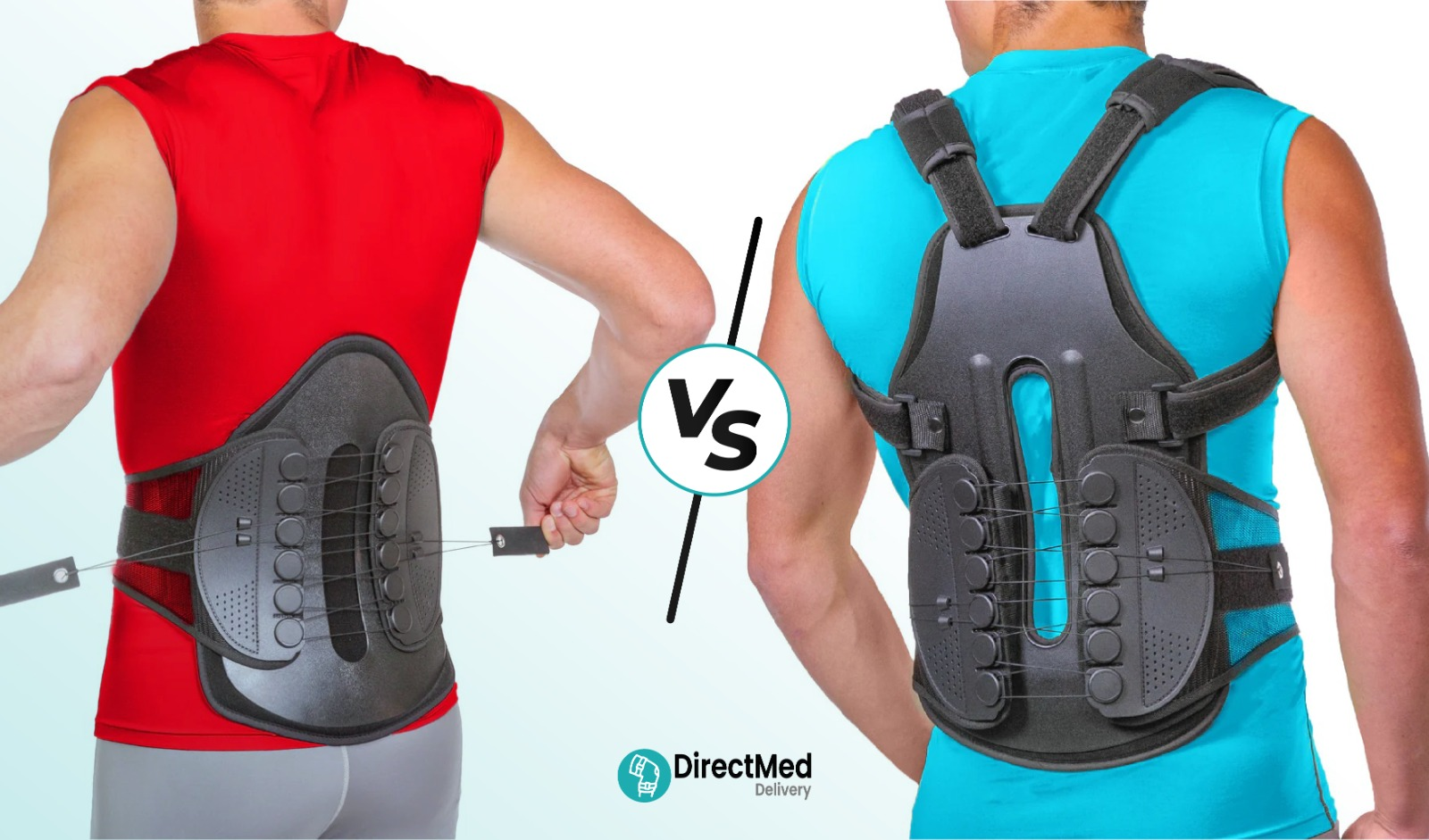
Upper Back Brace vs Lower Back Brace: Key Differences Explained
Knowing the distinction between a brace and a lower back brace is significant as both are medical instruments to support the spine; yet, they address entirely separate medical issues. They can look the same, but they differ in terms of the function along with their structure and treatment objectives based on the region of the spine that they support.
The primary purpose of using an Upper Back Brace is to provide the upper spine and shoulders with support and correct posture. A lower back brace is aimed at stabilizing the lumbar braces which supports the majority of the body weight. The selection of the appropriate one is determined by the location of pain, the level of activity, and medical condition.
Understanding the Basics: What Are Back Braces and Why Do You Need One?
The medical support devices used to stabilize the spine, lessen muscle strain and improve posture during movement in the day-to-day activities are referred to as back braces. They are usually prescribed to patients with back pain, postural imbalance, or post-injury or surgery recovery to allow the body to stay in a safer position and alleviate unnecessary stress. At DirectMed Delivery, these solutions are designed to help patients maintain safer alignment and reduce unnecessary stress.
How Back Braces Support Spinal Health
Back braces help to prevent excessive movement of the spine and give external assistance to weakened or damaged sections. This will alleviate strain on muscles, ligaments and joints and the spine will be able to rest and heal in a proper manner. In the long run, such support can work on the posture and alleviate the pain in everyday activities and body work.
Common Reasons People Use Back Braces
There are back braces which have a variety of uses depending on the condition and lifestyle of an individual. They are generally prescribed to help spinal positioning, alleviate pain, facilitate recovery, and give stability in the daily routine or physical work. Long sitting or standing can be made more comfortable, and additional injury can be prevented with the help of braces.
People often use back braces for several practical and medical reasons:
- Posture correction and spinal alignment
- Pain relief and muscle support
- Recovery after injury or surgery
- Support during physical labor or prolonged sitting/standing
- Stabilization during daily activities
The Core Functions of an Upper Back Brace
A Brace offers support to the upper spine, shoulders and thoracic area. It is mainly used to help correct posture, particularly in those who spend a lot of time sitting, working at a computer or acquire rounded shoulders because of weak upper back muscles or poor posture over time.
Posture Correction and Thoracic Spine Alignment
An Upper Back Brace is a very mild pull that pulls the shoulders back and promotes correct spinal positioning in the upper back. This will help minimize slouching and eventually the body will be trained to sit more naturally and upright without having to strain or inhibit normal movement in day-to-day activities
Preventing Slouching During Desk Work
Individuals who sit in front of desks most of the time tend to adopt bad posture which results in slouching. The brace also helps sit upright, which ought to remove the stress on the neck and upper back support brace muscles, promote comfort and concentration during prolonged working or studying hours.
Supporting Shoulder and Upper Back Muscles
The brace provides gentle external assistance and relieves the muscles of the shoulder and upper back of fatigue. This is especially beneficial in individuals that are stiffened as a result of spending hours sitting or performing tediously on the upper body to relieve the pain and looseness of the muscles in the day.
The Purpose of a Lower Back Brace (Lumbar Support)
A lumbar support brace or a lower back brace is a type of orthopedic braces that supports the lower spine which bears the majority of the body weight. It is applied in lower back pain, disc problems, sciatica or injury recovery and offers some structural support during motion, lifting and other daily physical tasks to aid in added comfort and stability.
Stabilizing the Lower Spine During Heavy Lifting
Lower back brace is used to protect the lumbar region during bending, lifting or holding heavy objects. It helps alleviate abrupt stress on the spine and helps in the safer movement especially those who engage themselves in physical work or jobs that involve repetitive movements of lifting.
Providing Immediate Lower Back Pain Relief
Compression offered by a lower back brace aids in pain relief by restricting unnecessary movement and providing support to the affected area. This will establish a stable condition of healing and even will enhance comfort when performing daily tasks like walking, sitting and standing.
Reducing Pressure on the Lumbar Discs
A lower back brace helps stabilize the spine, evenly spreading the pressure in the lumbar area. This helps lower the pressure on the spinal discs, and allows movement to be more controlled and wakes up, especially in cases of chronic lower back pain or other related conditions.
Upper Back Brace vs Lower Back Brace: Key Differences Explained
The purpose, design and medical implementation of both braces are different even though they serve the same purpose of support to the spine. The Brace is aimed at correcting posture and aligning the upper spine, whereas the lower back brace support is aimed at providing support, compression, and pain relief of the lumbar area during movements, recovery, and everyday physical exercises.
Target Areas: Thoracic vs Lumbar Spine
The Brace targets the thoracic spine, shoulders, and upper posture muscles. A lower back brace is concentrated on the lumbar spine which supports body weight and provides stability during movement and activity.
Design and Support Function
A Brace is lightweight, which should keep the upper spine and position straight, which is perfect to use in everyday activities and when sitting longer. On the other hand, a lower back brace is less flexible and offers more support, compression, and stability to pain or spinal problems.
Medical Conditions They Help With
Braces on the upper and lower back are used to treat various medical issues depending on the location of the spinal area and the severity of symptoms. They offer specific assistance to help in recovery, alleviation of discomfort and effective pain management in association with being able to improve posture and stability of the spinal system in day-to-day activities.
‣ Treating Kyphosis With Upper Back Braces
A Brace is used to treat Kyphosis by minimizing excessive upper spine curvature. It helps support shoulder alignment and encourages a more upright posture over time. For patients looking for the best upper back brace for kyphosis, consistent use under proper guidance can significantly improve posture correction and spinal positioning.
‣ Managing Sciatica and Herniated Discs With Lumbar Braces
A lower back brace is used to support such conditions as sciatica and herniated discs by decreasing the pressure on nerves. A back brace for herniated disc improves lumbar stability, reduces pain, and makes daily movement and physical activity safer and more comfortable.
How to Choose the Right Back Brace for Your Needs
The correct back brace will be determined by the location of your pain, the level of activity that you usually engage in and comfort requirements. The right option is one that offers more support, enhances better posture corrector brace provides safer healing. Regular application with medical supervision guarantees successful outcomes and aids in minimizing stress and promotes overall spinal health and stability.
Identify Your Pain Area
The initial process in the selection of a back brace is the location of pain. Posture-correcting support is recommended in the upper back and lumbar stabilization in the lower back to ease the strain of the lower back, improve spinal alignment, and mobility in daily life.
Material and Comfort Level
A good back brace should be breathable, adjustable, and should be comfortable to wear all day. When the right materials are used, irritation is minimized, airflow is enhanced and the materials can be used on a daily basis with the necessary support to the spine without restricting the natural movement or causing pain during routine activities.
Professional Guidance
It is advisable to consult a healthcare professional to ensure that you get the right back brace based on your health condition and recovery needs. This prevents improper use, provides safety and contributes to successful results and promotes health and comfort in the spinal column in the long-term.
Where to Buy Reliable Back Braces
The selection of a reliable provider guarantees quality, durability and fit. Direct Med Delivery will provide medically designed back braces based on the needs and conditions of the patients. Internet technology has offered ease and a broad range of options whereas local vendors might be able to offer physical fitting options, which can help in achieving more precision and comfort and long durability to the users. For personalized guidance and the right brace selection based on your condition, you can always contact our team.
The End Note!
To conclude, a decision on an Upper Back Brace or a lower back brace all depends on your condition and where the pain is. They both play a significant role in spinal support but have different functions in treatment and comfort in daily life.
A Brace is used to correct posture and to align the upper spine, whereas a lower back brace is used to stabilize and alleviate pain in the lumbar area. Both choices have the potential to enhance mobility, comfort and quality of life of patients when administered appropriately and in the right direction.
FAQs
Can You Wear a Back Brace All Day?
A back brace can be worn during the day depending on comfort and medical advice. However, continuous long-term use without guidance is not recommended as it may reduce natural muscle activity over time.
Do Back Braces Actually Help with Pain?
Yes, back braces help reduce pressure on the spine and provide external support. This improves posture, reduces strain on muscles, and helps manage both upper and lower back pain effectively.
Should You Sleep While Wearing a Back Brace?
Sleeping with a back brace is generally not recommended unless specifically advised by a healthcare professional. The body needs natural movement and relaxation during sleep for proper recovery.
Can Back Braces Weaken Muscles?
Overuse of a back brace may reduce muscle engagement over time. That is why balanced use along with light exercises is important for maintaining natural strength and spinal health.
How Do You Know Which Brace You Need?
The choice depends on pain location and condition. Upper back pain requires posture correction support, while lower back pain requires lumbar stabilization for proper relief and recovery.