
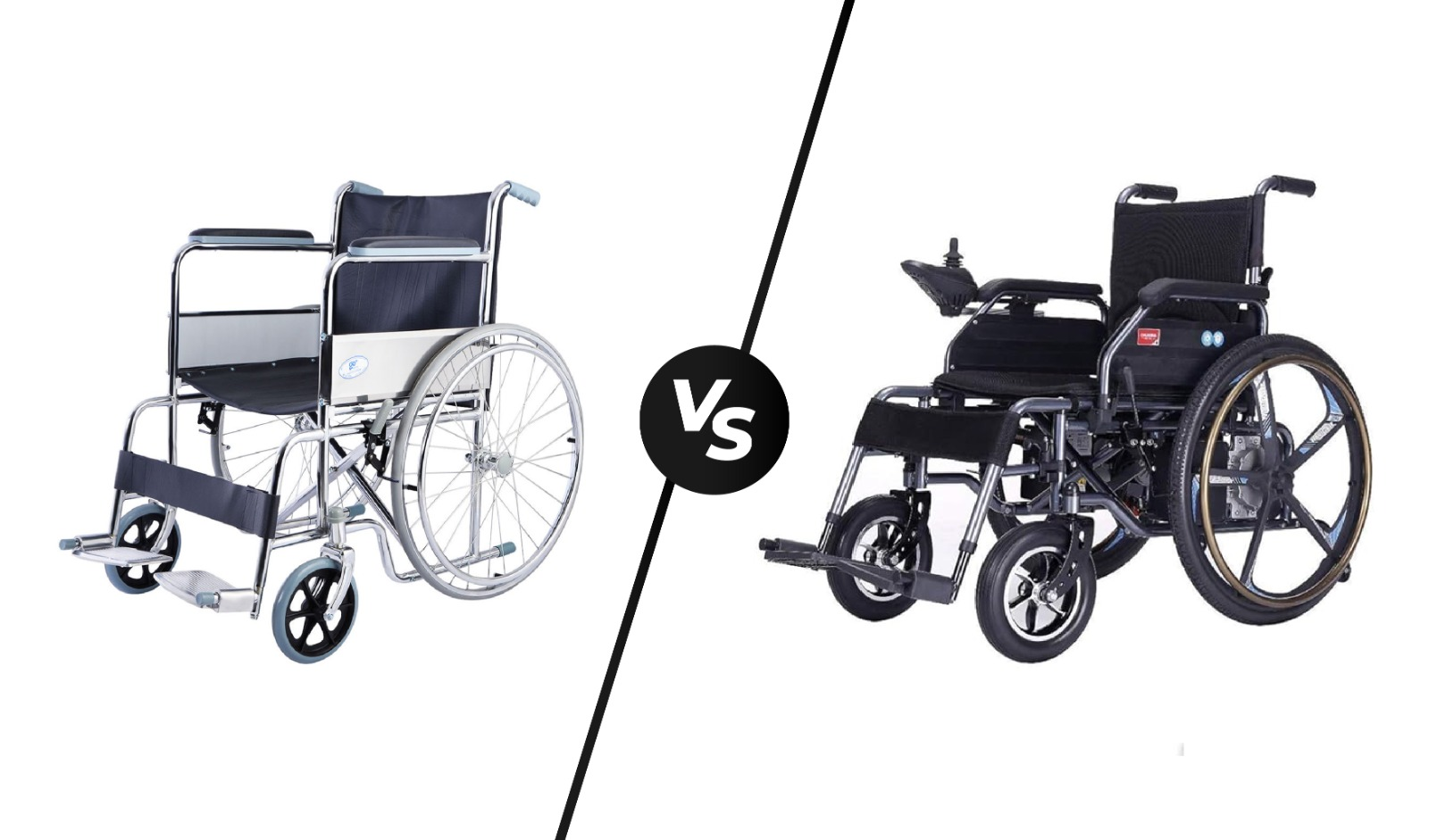
The correct mobility device is more than a means to move about, but also independence, comfort, and way of life. Wheelchairs made manually or powered by electricity have their own advantages. The DirectMed Delivery guide divides effort, cost, and daily use to assist a first-time buyer, caregiver and seniors to select the wheelchair that fits their body and life.
Understanding the Basics – Two Wheels, Two Worlds
The only way to know the head to head clash between a Manual Wheelchair vs the Electric Wheelchair is first to know the DNA of each equipment. They both pursue the same objective, which is mobility, in a completely different philosophy.
What Is a Manual Wheelchair?
The manual wheelchair is a human powered mobility aid that is pushed by the human being using hand rims or propelled by a caretaker. It is mobile, easy, and physically involved to move around.
‣ How It Works
The user moves forward with upper body strength by use of a system comprising of two large rear wheels and two pivotal front casters. The mechanic is very simple, therefore, there is not much that can go wrong.
‣ Who Commonly Uses It?
It is the gold standard device that should be used by those possessing good upper body strength, those with temporary injuries, or those living an active lifestyle. It is also the option of preference by people who would like to remain physically active.
Types of Manual Wheelchairs (Standard, Lightweight, Sports)
Manual chairs are not all equal. Normal hospital type chairs are bulky and unwieldy. Travel lightweight manual wheelchairs are however designed using aluminum or titanium, and thus they are easy to move in a car. There are also rigid-frame sports chairs that can be used by the athlete, whether in basketball or tennis.
What Is an Electric (Power) Wheelchair?
An electric wheelchair is a battery-powered mobility aid that does not require any manual movement to operate and is utilized by individuals with low levels of strength to move freely, securely and effectively across different distances.
‣ How It Operates
Wheelchairs are electrically powered using a small motor. The speed and direction are controlled with a joystick, Sip and puff device, or head array to allow easy movement.
‣ Key Components (Motor, Battery, Joystick Control)
The deep-cycle and motor battery drive movement and the joystick or control interface translate delicate user movement to the vehicle, and this makes the daily movement and precise and independent control of the wheelchair.
Types of Power Wheelchairs (Travel, Heavy-Duty, Standing Models)
Nowadays, electric wheelchairs of small apartments where you can fold it like a suitcase; or electric wheelchairs with bariatric features and capacities up to 100 kg are available. Even the luxurious ones have standing features that take the user to the eye level.
The Power Showdown – Effort vs Automation
Energy output is the fundamental distinction when comparing the Manual Wheelchair and the Electric Wheelchair dynamic.
Physical Effort & Energy Use
Manual wheelchairs are also very demanding of the upper body, using triceps and deltoids as well as grip. Electric wheelchairs are energy efficient, which eliminates fatigue and strain, which is suitable when it is necessary to cover a distance or when one is of a low strength.
‣ Upper Body Strength Requirements
A manual wheelchair is a physical exercise. It needs triceps, delt and grip strength. This is tiring to a person going through surgery. But to a young paraplegic, this exercise is necessary to keep the muscles and cardiovascular fit.
‣ Fatigue Over Long Distances
It is here that the electric alternative prevails. Using a manual chair to move through shopping mall or a university campus may cause a lot of shoulder fatigue and repetitive strain injury. An electric chair will be your friend, in case you want to save some energy to work or socialize.
Speed & Mobility Range
Manual wheelchairs are better in indoors tight maneuvering, whereas electric wheelchairs are better in outdoor performance, superior in hills navigation and range of travel as they are powered by batteries rather than human stamina.
‣ Indoor Maneuverability
A small manual wheelchair will be better in a tight bathroom or tight kitchen. The turning radius of the electric chairs is wider. This gap is however becoming a lot smaller with the modern front-wheel-drive electric models.
‣ Outdoor Terrain Performance
In case you stay in a place with high driveways you must have the best wheelchair in hilly areas. As a rule, a strong electric wheelchair with the center wheel drive moves more efficiently over the incline, compared with the manual chair, which demands tremendous physical efforts to overcome the ramp.
Battery Life vs Human Endurance
A manual chair can be propelled by a human till he is physically exhausted. An electric chair is powered to the battery death. The electric wheelchair that has the highest battery life will cover a range of 20-25 miles per charge.
Comfort, Customization & Daily Living
All wheelchairs vary in their comfort and posture support and effects on lifestyle. Manual chairs are light and can be transported and electric chairs have powered conveniences, tilt functions and easy movement over a long distance and daytime autonomy.
Seating & Posture Support
Recline, tilt and wheelchair cushion features are used to promote posture and avoid pressure ulcers. Electric chairs can be powered to make adjustments whereas manual chairs depend on the repositioning of the user to make them comfortable.
‣ Cushioning Options
These two chairs have gel, foam cushions or air cushions. Nevertheless, Manual Wheelchair users are usually in need of specialty pressure-relief cushions to avoid sores because they are in a sitting position longer than powered reclining.
‣ Recline & Tilt Features
Benefits of the manual wheelchair as an everyday use wheelchair include ease but they do not provide powered recline. Tilt-in-space functionality is also common to electric chairs, but is important to people who are unable to move their own weight forward.
Independence & Lifestyle Impact
Manual chairs promote physical workouts and mobility, but on the other hand, electric wheelchairs offer effortless movement, increased travelling range and increased autonomy to individuals who have some weakness or endurance.
‣ Traveling with a Wheelchair
As a globetrotter, your best friend is a lightweight folding manual wheelchair that can be used when traveling. It fits on top bins (on bigger planes) or trunks. Electric wheelchairs, especially the ones that cannot remove their batteries, must be handled special by the airline, and they can be deducted in your baggage allowance.
‣ Storage & Portability
Directmed delivery frequently informs the customer that without a ramp or a van, it is easier to deal with a manual chair. Moving a 40-pound manual chair is not difficult, but moving a 150-pound power chair is not possible without a vehicle lift.
‣ Home Accessibility Considerations
Do you need to navigate thick carpet? Electric. Do you have hardwood floors and level thresholds? The manual works beautifully.
Cost Comparison – Budget Today vs Investment Tomorrow
The question of Manual vs electric wheelchair cost comparison is often the deciding factor.
Initial Purchase Cost
A lower cost manual wheelchair that suits elderly in the USA falls at less than 200 dollars. The simplest and low-quality electric wheelchair costs approximately 1500-15000 dollars and in no time goes up to 15000-150000 dollars in buying higher models programmed to drive like a car.
‣ Insurance & Funding Options
Medicare Part B typically covers 80% of the cost for either chair, provided you meet the medical necessity criteria. For those without insurance, Electric wheelchair grants and funding options are available through organizations like the ALS Association or Muscular Dystrophy Association. DirectMed Delivery can assist in verifying your insurance benefits to maximize coverage.
‣ Long-Term Value
Although the manual chairs are cheaper in the short term, they are not the cheapest in the long-term. Manual propulsion causes repetitive strain that may result in rotator cuff surgeries which are tens of thousands of dollars. An electric chair, which is very costly, in this respect is preventative healthcare.
Maintenance & Repair Expenses
Manual wheel chairs do not take much care such as having tires repaired, but electric chairs need care of batteries, motor service and sometimes the assistance of techno, which makes them very expensive in the long run.
‣ Battery Replacement Costs
Maintenance of the electric wheelchair needs care. Batteries have a lifespan of 1-2 years and are priced at 100-300 to have them replaced.
‣ Mechanical Repairs & Servicing
A manual wheelchair can get a flat tire that can be patched with a patch kit costing five dollars. The electric wheelchair presupposes special diagnostic computers and certified technicians.
Safety & Reliability – What You Need to Know
Stability & Balance
- Manual Wheelchair users are taught how to lift up a wheelie in order to manoeuvre through curbs, which comes with a danger of tipping over. Anti-tipping wheels are installed on electric chairs, but the user should beware of potholes.
- When you stop rolling, so do the manual chairs. The automatic electromagnetic brakes that are set in electric chairs activate the second time you release the joystick.
Durability & Longevity
‣ Frame Materials
Specially designed manual wheelchairs, which conform to a person’s requirements, are frequently made of titanium of aerospace quality. Electric wheelchairs focus on the use of steel as a weight-bearing ideal.
‣ Weather Resistance
There are both types of durable wheelchairs used outdoors, but extreme cold consumes the electric batteries.
Pros & Cons at a Glance
Manual Wheelchair – Advantages & Drawbacks
Advantages of manual wheelchairs for daily use:
- Lightweight and portable
- No battery anxiety
- Lower initial investment
- Provides cardiovascular exercise
Manual wheelchair pros and cons list wouldn’t be complete without mentioning the strain on shoulders and the difficulty of navigating steep inclines.
Electric Wheelchair – Advantages & Drawbacks
Electric wheelchair benefits:
- Independence for those with no upper body movement
- Smooth, consistent speed
- Advanced seating functions
Do electric wheelchairs justify the price? Yes, in case you have to save some energy and move safely outdoors. They are however heavy and also need a lot of maintenance.
Who Should Choose What? A Decision Guide
The choice of manual and electric wheelchairs is subject to certain situations.
Best for Active & Short-Distance Users
Manual wheelchairs are suitable in the cases of active people and sports lovers. Light models are convenient to handle and carry and back pressure on the chair by the caregivers is less to the back.
Ideal for Limited Strength or Long-Distance Mobility
Electric wheelchairs can be utilized with seniors or people with little strength. They enhance physical activity, eliminate exhaustion, make it safe to travel over long distances, promote self-sufficiency, and reduce the chances of breathlessness or accidents.
Medical Conditions That Influence the Choice
Strength and endurance is impacted by arthritis, spinal cord injuries or neuromuscular disorders. Manual wheelchairs can be a strain on the joints whereas electric wheelchairs save energy and increase daily independence.
‣ Arthritis & Joint Pain
Arthritic or inflamed hands that are used in rim propulsion can be very painful in the long run. The electric wheelchair joystick uses the minimum amount of grip strength therefore relieves the strain on the joints and eliminates the pain experienced during the day.
At DirectMed Delivery, we direct you to the correct fit, to mobility aids as well as all necessary knee braces, which bring freedom, dignity, and confidence with each delivery.
‣ Spinal Cord Injuries
Patients that have sustained C5-C6 spinal cord injuries can still have some movement of the arms but have weak hands. Whereas manual chairs that have rim projections may be effective, electric ones are more independent.
‣ Neuromuscular Disorders
In such cases as MS or ALS, where the weakness and exhaustion of muscles constantly increase, it is critical not to waste physical energy. A wheel chair is an electric chair that will allow one to maintain strength in important daily tasks.
Expert Tips Before You Buy
- Is my diagnosis that I shall be growing stronger or weaker?
- Will a Manual Wheelchair damage my joints in my condition?
Testing Before Purchasing
You wouldn’t buy a car without a test drive. DirectMed Delivery encourages you to visit a showroom. Feel the weight of the frame. Try maneuvering through a mock doorway.
Trying Rental Options First
If you are on the fence, rent first. It allows you to experience what is the difference between manual and electric wheelchairs in your actual environment: your kitchen, your local park, your workplace.
The End Note!
It is, therefore, Manual Wheelchair vs Electric Wheelchair: Which Is Better? The most suitable option is the one, which suits your lifestyle. Whether to go Electric or Manual Wheelchair depends on whether you want to move around easily or move around and live a typical life.Trust DirectMed Delivery to help you move confidently and navigate life on your own terms.
FAQs
Is an electric wheelchair better than a manual wheelchair?
It is based on your strength, mobility requirements and lifestyle, with electric being less effort consuming, manual is cheap and portable at large.
How long does an electric wheelchair battery last?
Electric wheelchair batteries depending on terrain, weight and capacity, last between eight and fifteen miles on a single charge.
Are manual wheelchairs easier to travel with?
Indeed, compared to electric wheelchairs, manual ones are lighter, foldable, and can be transported in the trunk of a car and airplanes in general.
Which wheelchair is more affordable?
Manual wheelchairs are much cheaper at the initial purchase, but electric types are more expensive because of the motors, batteries and other sophisticated features.
Can I switch from a manual wheelchair to an electric one later?
Yes, a good percentage of users change with age either in mobility or physical strength and need to be assisted using some power at some point.